Bookcase for Home Office: Vertical Storage That Clears the Desk
A home office bookcase should lift books and binders off the desk, stay narrow enough for a chair path, and include a wall anti-tip kit you will actually use.
By Harper Lin
Homeofficebasics is reader-supported. As an Amazon Associate we earn from qualifying purchases. Learn more.
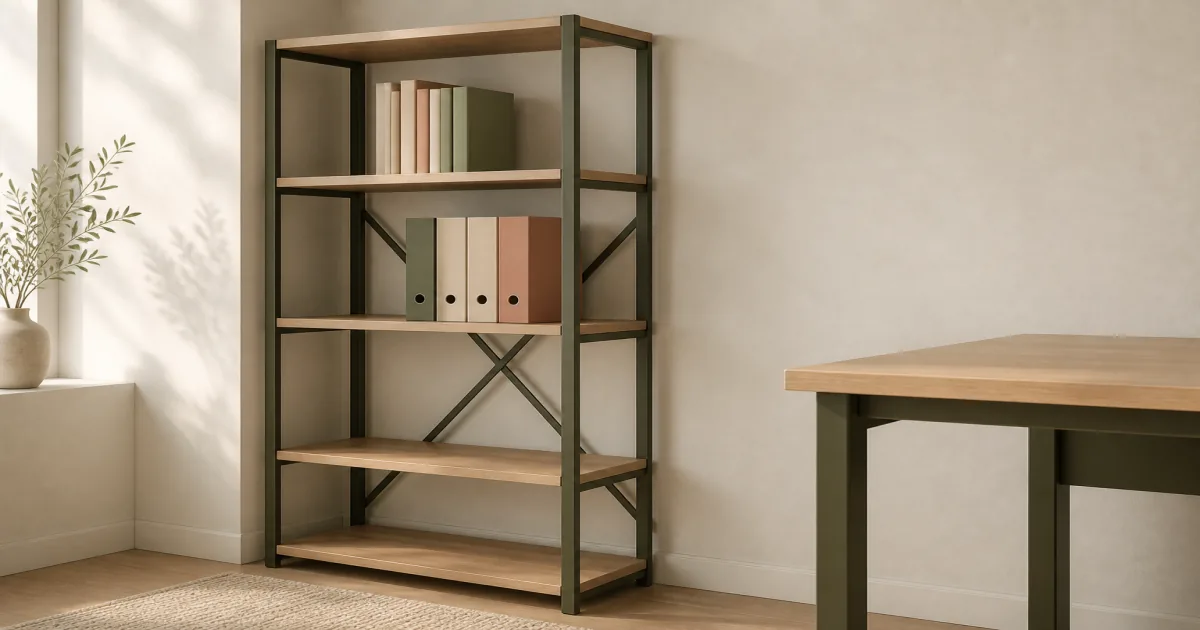
The short answer: For most home offices, start with the SUPERJARE 4-Shelf Industrial Bookshelf (paid link) when you want sturdy open shelves. Switch to the VASAGLE 5-Tier Narrow Ladder Bookcase (paid link) when the only free wall is a slim strip beside the desk.
Our picks
A bookcase for a home office exists to get weight off the desktop: binders, manuals, reference books, and the random gear that otherwise becomes a permanent keyboard neighbor. Browse more desk accessories when you are finishing storage, and keep the main work surface plan tied to a solid standing desk if the furniture stack is still incomplete.
This is not a living-room showpiece brief. Measure the wall strip, the chair path, and binder depth before you fall for a wide unit that blocks the door.
What a home office bookcase has to do
- Hold letter binders without tippy top shelves.
- Stay narrow so a chair and door can still clear.
- Anchor safely with a real anti-tip kit.
- Keep daily tools nearby without becoming another dumping ground.
If the job is locked tax packets, buy a filing cabinet for home office instead of hoping open shelves stay private. If you only need a tier behind the monitor, a desk hutch is closer to the keyboard than a freestanding case.
Hero pick: SUPERJARE industrial bookcase
The SUPERJARE 4-Shelf Industrial Bookshelf (paid link) is the default when you have a normal wall strip and want open shelves that still feel like office furniture. The metal frame and open etagere layout make it easy to see binders and manuals without opening doors.
Anchor it. Rolling chairs and curious pets turn tall open shelves into a tip risk. Use the included hardware into a stud when you can.
Edit the shelves. Open sides look clean with a short stack of binders and a plant. They look chaotic when every shelf is a random cable museum.
Narrow option: VASAGLE ladder bookcase
When the only free space is a slim strip between desk and wall, the VASAGLE 5-Tier Narrow Ladder Bookcase (paid link) is the better fit. The ladder profile saves depth while still giving five levels for mixed heights.
Watch the taper. Upper shelves are not for a full legal-binder row. Put heavy books lower, light manuals higher, and leave the top for light decor.
Level the feet. Uneven floors make ladder units feel wobbly even when the frame is fine.
Bookcase vs other office storage
Use the table to stop buying the wrong category. A bookcase will not replace a lockable drawer, and a clamp shelf will not replace vertical wall storage.
Placement tips that keep the desk usable
Put the bookcase on the side opposite your main cable drop so you are not stepping over power strips every time you pull a binder. Leave enough chair travel that stand-to-sit transitions stay easy on a sit-stand desk.
If a printer lives in the same room, keep it on a printer stand rather than loading the top shelf beyond its rating. Top-shelf printers tip the balance and eat the best display space.
Keep one empty shelf on purpose. Overflow always appears. An empty tier is cheaper than another impulse organizer.
Load, depth, and what not to put on open shelves
Put the heaviest binders on the lowest shelves. Tall units tip more when the top is loaded and the bottom is empty. Letter binders usually need about 10 to 12 inches of usable depth; anything thinner forces books to hang over the edge.
Skip glassware, heavy printers, and unsecured speakers on the top shelf. Those items turn a tip into a mess. Keep liquids off paper shelves entirely.
If you store network gear or a dock on a middle shelf, leave cable slack so a standing desk can rise without yanking the bookcase. Route excess length with simple sleeves from our cable management guide.
Assembly and finish notes that matter
Most home office bookcases ship flat. Clear a floor space bigger than the finished width before you open the box. Tighten frame bolts after the unit stands for a day; wood panels settle and metal frames can loosen a half turn.
Wipe particleboard with a damp cloth, not soaking cleaners. Open industrial shelves show dust faster than closed cabinets, so a quick weekly wipe keeps the unit looking intentional.
If the finish is rustic brown or black metal, match nearby desk legs when you can. You do not need a matched furniture set, but clashing black and chrome next to a pale oak desk looks accidental.
When to skip a freestanding bookcase
Skip it if the room has no wall you can anchor into, if the only free strip is behind a door swing, or if you only need two binders within arm's reach. In that last case, a desk hutch or a small desk organizer is enough.
Also skip a tall open unit in a hallway-narrow office where every inch of chair travel matters. A low rolling file cabinet plus under-desk bins may clear more usable space than a showpiece shelf you cannot walk past.
Bottom line
Buy the SUPERJARE industrial bookcase when you want sturdy open shelves for a normal wall. Buy the VASAGLE narrow ladder bookcase when the room only gives you a slim strip. Anchor either one, put heavy binders low, and keep locked paper in a filing cabinet instead of on open shelves.
Frequently Asked Questions
What bookcase works best in a home office?
An open industrial unit like the SUPERJARE shelf for most rooms, or a narrow VASAGLE ladder bookcase when the wall strip is tight. Prioritize depth for binders and an anti-tip kit.
Bookcase vs filing cabinet?
A bookcase is for books, manuals, and display storage. A filing cabinet is for hanging paper you need to lock. Many offices need both.
How deep should a home office bookcase be?
About 9 to 12 inches works for most paperbacks and letter binders. Deeper units eat walk space beside a desk chair.
Do I need to anchor a bookcase to the wall?
Yes if kids, pets, or rolling chairs share the room. Use the included anti-tip kit into a stud or rated drywall anchors.
Can a bookcase replace a desk hutch?
Sometimes. A hutch sits on or behind the desk for near-hand items. A freestanding bookcase clears the desk entirely and stores bulk better.
Open shelves or closed doors?
Open shelves are faster for daily binders and look cleaner if you edit what lives there. Closed doors hide mess but cost more floor depth.
Where should a bookcase sit relative to a standing desk?
Beside the desk on the non-cable side so chair travel stays clear, or on a back wall if you stand and turn for reference books.