Filing Cabinet for Home Office: A Two-Drawer Kit That Locks
A filing cabinet for a home office should hold letter files, lock when you need privacy, and stay narrow enough to live beside the desk without eating the room.
By Alex Turner
Homeofficebasics is reader-supported. As an Amazon Associate we earn from qualifying purchases. Learn more.
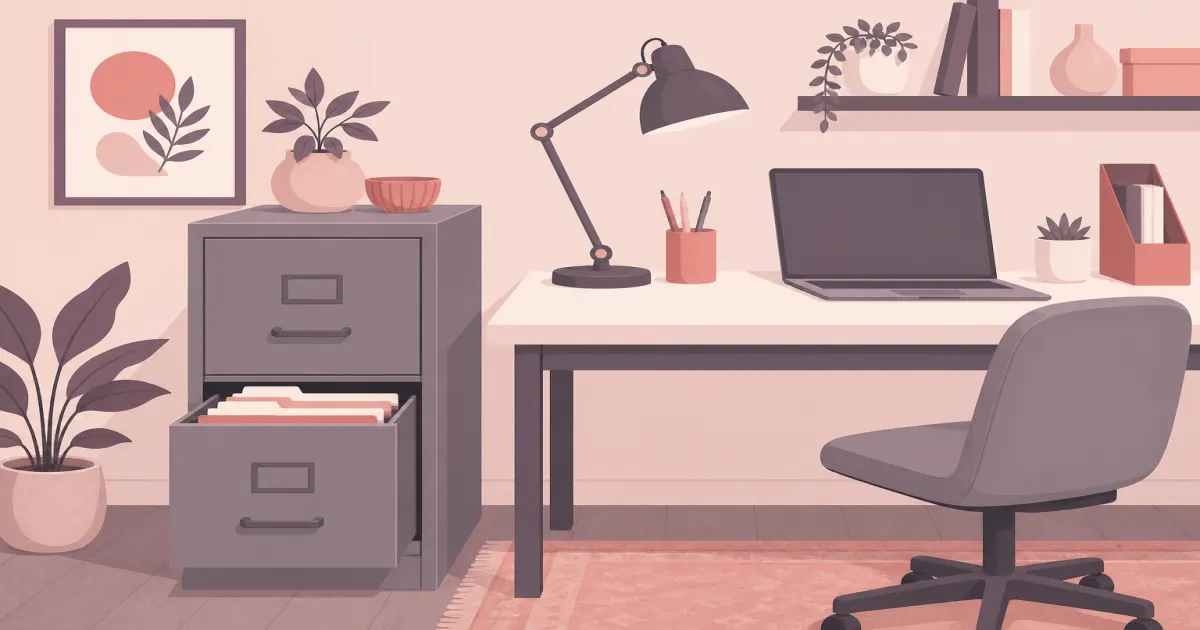
The short answer: For most home offices, buy a narrow lockable two-drawer steel cabinet. Start with the BYNSOE 2 Drawer File Cabinet with Lock (paid link), and use the SISESOL 2 Drawer File Cabinet with Lock (paid link) when you want drawer label tags built in.
Our picks
Paper still shows up: tax packets, contracts, manuals, school forms. A filing cabinet keeps that stack off the desk without pretending you need a corporate records room.
Measure the space beside your desk before you order. Leave drawer travel clear of a heater, cable drop, or door swing.
What the kit needs to do
- Hold letter hanging files without bending the rails.
- Lock when the room is shared.
- Stay narrow so a chair and door can still clear.
- Resist tip-over with interlocking drawers and level feet.
Skip giant four-drawer units unless you already know you have the wall run. Most apartments only need two drawers. If you need casters so the cabinet can move under a desk or into a closet, see the rolling file cabinet guide instead.
Kit item 1: BYNSOE two-drawer cabinet
The BYNSOE 2 Drawer File Cabinet with Lock (paid link) is the default home-office cabinet in this kit. It is a slim steel two-drawer unit with a lock and full-extension slides.
Plan on assembly. Watch the seller video, keep the pieces sorted, and level the feet before you load files. Light-duty steel is fine for home paper. It is not a commercial fire-rated file room.
Who it is for: A single worker who needs letter files beside the desk and basic privacy.
Shop: BYNSOE filing cabinet on Amazon (paid link)
Kit item 2: SISESOL labeled drawers
The SISESOL 2 Drawer File Cabinet with Lock (paid link) is the alternate when you want label tags on the drawers from day one. Anti-tilt interlocking drawers help if kids or pets are in the room.
Choose SISESOL if labeled drawers matter more than a simpler front. Choose BYNSOE if you want a cleaner face and are fine labeling folders yourself. Both need careful assembly and a level floor.
Who it is for: Shared rooms where “tax” and “manuals” labels save time.
Shop: SISESOL filing cabinet on Amazon (paid link)
Placement beside the desk
Put the cabinet on the non-dominant side so your chair still rolls freely. Leave drawer travel clear of a heater, cable drop, or door swing. If the desk already has shallow drawers, keep daily pens in a desk organizer and reserve the cabinet for paper you open monthly.
For sit-stand desks, keep the cabinet off the moving frame. File cabinets belong on the floor, not on a rising desktop. Finish power with simple cable management so cords do not catch when a drawer opens.
What to put in each drawer
Keep a simple split. One drawer for active year paperwork: taxes in progress, insurance card copies, lease, warranties you still use. The second drawer for closed years and manuals you rarely open. Label hanging folders with years or topics, not vague names like “misc.”
Do not fill drawers with office supplies. Pens and chargers belong in a desk organizer or shallow desk drawers. Heavy binders in a light home cabinet can bend rails. Prefer hanging folders and leave space so files slide.
Scan what you can, but keep originals that banks and insurers still want on paper. A cabinet is cheaper than reprinting a lost title packet at the worst moment.
Color tabs help if more than one person files. Agree on the system once. A cabinet with mystery folders is just a metal stack of guilt.
Budget and “good enough” buying
You do not need a commercial five-drawer tower for a laptop job. A narrow two-drawer unit usually wins on price, footprint, and how often you will actually open it. Spend for a lock, smooth slides, and letter rails that do not flop. Skip decorative wood cabinets that look nice in photos but sag under hanging folders.
Compare dimensions to your chair roll zone. A cabinet that blocks the chair path will get shoved into a closet. Measure once, then order.
If a product photo shows legal-size rails, confirm letter folders still hang correctly. Many US homes only need letter. Legal depth wastes space if you never use it.
Assembly and safety notes
Clear a floor space before you open the box. Sort screws by size. Tighten feet so the cabinet does not rock when a full drawer opens. Interlocking anti-tip drawers only help if you assemble them correctly. One drawer open at a time is the rule for a reason.
Anchor tall units to a wall if the maker calls for it or if kids can climb. Two-drawer home cabinets are shorter, but a loaded open drawer still shifts the center of gravity. Level the cabinet on hardwood and rug transitions so it does not creep.
Keep keys in a known place. A lock is useless if the keys live in the unlocked drawer. If you share the room, decide who holds the spare.
When a bigger cabinet makes sense
Move up to three or four drawers only if you already overflow two drawers of hanging files. Most remote workers do not. A second narrow cabinet can be easier to place than one deep commercial tower.
If your desk already includes deep file drawers, you may only need a small lockbox for passports and spare keys. See standing desk with drawers before you buy a freestanding cabinet you will not fill. An open-top executive desk is another common pairing when the desk has no file pedestal.
Bottom line
Build the kit around a narrow lockable two-drawer steel cabinet. Start with BYNSOE for most desks, or SISESOL when labeled drawers help. Load letter files, lock what needs privacy, and keep the desk surface for work in progress instead of paper piles.
Frequently Asked Questions
What filing cabinet works best in a home office?
A narrow two-drawer steel cabinet with a lock and letter-size hanging rails. The BYNSOE two-drawer cabinet is the kit default for most desks.
Letter or legal size?
Most US home offices only need letter. Confirm the rails before you buy hanging folders. Legal needs a deeper drawer.
Do I need a lock?
Yes if the room is shared, or if you keep tax and ID paperwork in the drawers. A light lock is enough for privacy. It is not a fire safe.
Can I put a printer on top?
Only if the cabinet is rated for the weight and sits fully assembled on a level floor. Keep the printer cable managed so drawers still open. Many people prefer a dedicated printer stand instead of loading the cabinet top.
Filing cabinet vs desk drawers?
Desk drawers are for daily tools. A filing cabinet is for paper you need to keep but not see every hour. Pair both if you use a standing desk with drawers.