Home Office Ergonomic Setup: Get the Basics Right First
A home office ergonomic setup starts with desk height, a chair that plants your feet, then small tools like a footrest or a split keyboard if your wrists still twist.
By Harper Lin
Homeofficebasics is reader-supported. As an Amazon Associate we earn from qualifying purchases. Learn more.
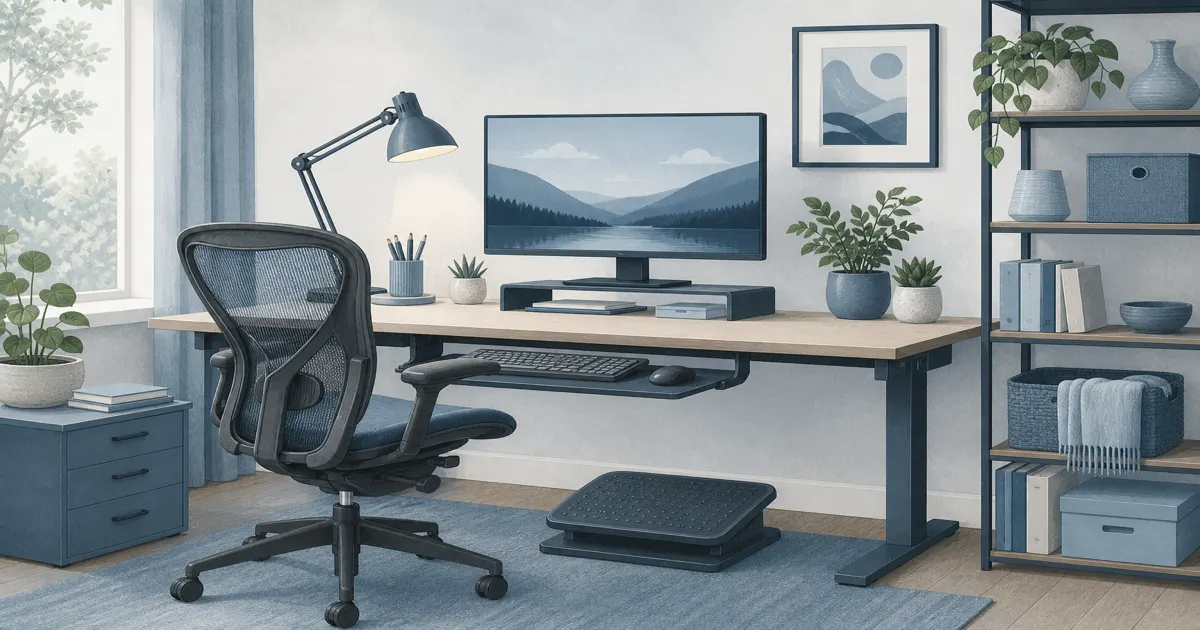
The short answer: A home office ergonomic setup starts with height, not gadgets. Get the desk and chair so feet plant and elbows drop. Add the Everlasting Comfort footrest (paid link) if your feet still dangle. Add the Logitech Ergo K860 (paid link) if a flat keyboard still twists your wrists.
Our picks
A home office gets uncomfortable when several small mismatches pile up. The chair is a little too high. The screen is too low. Your feet swing. Then people buy a fancy keyboard hoping it will fix the dining table. It will not.
Set standing desk height first. Pair it with a chair from best office chair. Only then does a footrest or a split board earn its keep. If the main furniture is still wrong, skip this page and buy that first.
Height, then feet, then wrists
Feet should rest flat. If they dangle after the chair is as low as it goes, a footrest gives them a platform. If the desk is too high, lower the desk or add a tray. Do not stack foam under dangling feet and call it done.
Wrists should stay closer to straight than cocked. A curved split keyboard helps some people after the desk is already at elbow height. It is a larger board. Measure depth before you order.
Screen height is the third check. Looking down all day is a neck problem, not a keyboard problem. Raise the monitor after the desk is set.
Primary pick: Everlasting Comfort Foot Rest
The Everlasting Comfort Foot Rest for Under Desk at Work (paid link) is the simple foam option when your feet need a place to land. The cover washes. The base should stay put. You can flip it for a gentle rocking position if you like to shift during calls.
It will not lower a dining-table desk. If your shoulders are already shrugged, fix the work surface first. Use the footrest when the chair height is otherwise close and your feet still want a platform.
Who it is for: Long sits where feet dangle, or you want a cheap way to change foot position without buying a new chair.
Skip if: The whole chair is wrong, or the desk is still too high.
Shop: Everlasting Comfort footrest on Amazon (paid link)
Alternative: Logitech Ergo K860
The Logitech Ergo K860 (paid link) is the keyboard to try when furniture already fits and a flat board still turns your wrists inward. The curved split is easier to learn than two fully separate halves. The cushioned rest is attached, so measure desk depth. Wireless switching helps if a work laptop and a home computer share one surface.
Expect a few days of extra typos. Sharp pain is a stop sign, not a “break-in.” More keyboard detail lives in best ergonomic keyboard.
Who it is for: Full-day typists who already have decent desk height and want a less twisted wrist angle.
Shop: Logitech Ergo K860 on Amazon (paid link)
The order that actually works
- Set chair and desk so feet plant and elbows meet the keys.
- Raise the screen.
- Add a footrest only if feet still dangle.
- Change the keyboard only if wrists still twist on a flat board.
- Stop adding accessories until a full work week proves the layout.
A standing desk can help as a break. It does not replace this order.
Bottom line: Treat a home office ergonomic setup as height first. Use the Everlasting Comfort footrest when feet need a platform. Use the K860 when the board is the remaining twist. More setup guides live on the blog and homepage.
Frequently Asked Questions
What should I fix first in a home office ergonomic setup?
Desk and chair height. Feet flat, elbows near 90 degrees, screen near eye level. A footrest or split keyboard comes after that.
When do I need a footrest?
When your feet dangle after the chair is as low as it can go, or you want a place to shift your feet on long calls. It will not fix a desk that is still too high.
When do I need an ergonomic keyboard?
When the furniture already fits and a flat board still twists your wrists inward. Give the split a week of real typing before you decide.
Can gear replace a better chair?
No. A footrest and a curved keyboard will not add lumbar or seat depth. Start with best office chair if the seat itself is wrong.
Does standing replace this setup?
Standing is a break, not an all-day substitute. Set sit and stand heights with standing desk height.
Is this medical advice?
No. Persistent pain, numbness, or symptoms away from the desk need a clinician. This is comfort and fit for a workday.