Balance Board for Standing Desk: Gentle Motion Underfoot
A balance board for a standing desk keeps your feet from locking into one stiff stance. Use it in short blocks, then switch to a cushioned mat when you want less challenge.
By Nate Brooks
Homeofficebasics is reader-supported. As an Amazon Associate we earn from qualifying purchases. Learn more.
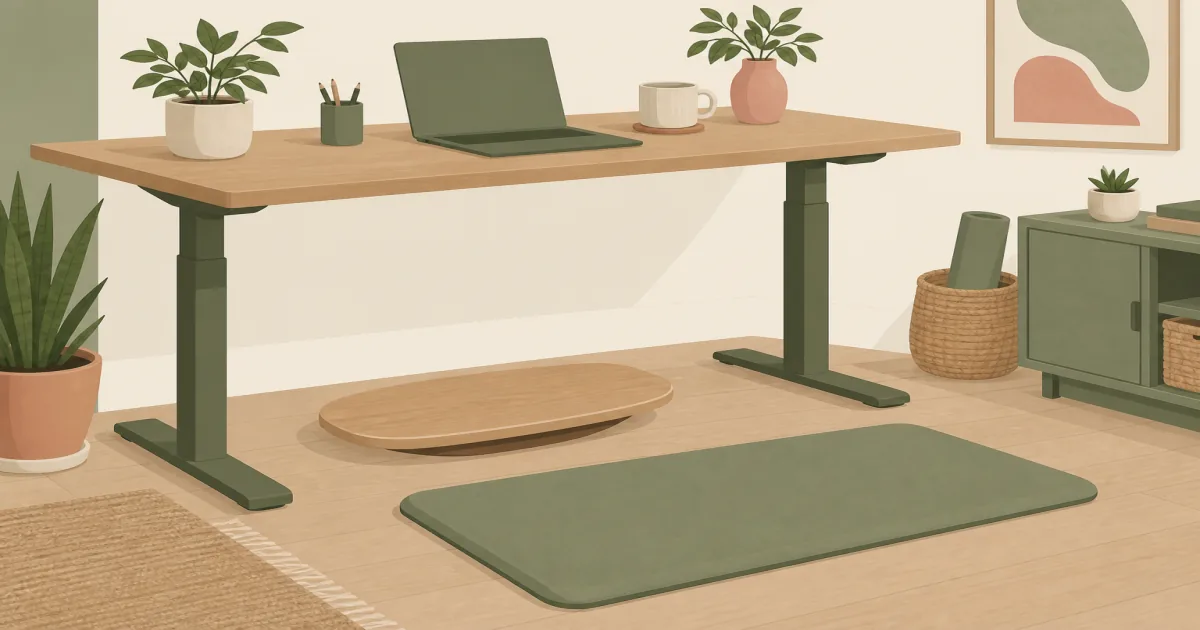
The short answer: A balance board standing desk setup helps when your feet lock into one tired stance. Use the StrongTek wooden balance board (paid link) for short movement blocks, then switch to the Topo mat (paid link) when you want cushion without the rocker challenge.
Our picks
Standing desks fix sitting. They do not automatically fix stiff ankles. A lot of people raise the desk, plant both feet, and recreate the same frozen posture they had in a chair. A balance board is one way to keep your lower body lightly busy while your hands stay on the keyboard.
It is not magic cardio. It is a standing-desk accessory with a clear job: add small movement underfoot so you are less likely to lock your knees and quit standing by lunch.
If you mainly want softer flooring, start with an anti fatigue mat for standing desk setups. If you want a walking option, see under desk treadmill gear. A board sits between those two: more active than a mat, less of a machine than a walking pad.
Balance board vs mat vs walking pad
You do not need all three on day one. Many standing desks feel better with a mat alone. Add a board when stillness is the complaint, not cushion.
Kit item 1: StrongTek Wooden Balance Board
The StrongTek Wooden Balance Board (paid link) is the best first board for most home offices that want real movement without buying a premium aluminum deck. The wooden platform gives you room for a normal stance. The attached rocker base keeps you from chasing a loose roller across the room.
Use it for short work blocks: email triage, light coding, calls where you can glance down safely. Keep a hand near the desk edge the first few sessions. The point is controlled shifts, not proving you can surf during a spreadsheet.
If your standing desk frame already wobbles at full height, fix the desk first. A board on a shaky top stacks two unstable systems. Start with a solid standing desk and correct height before you add motion underfoot.
Shop: StrongTek wooden balance board (paid link)
Kit item 2: Topo by Ergodriven mat
The Topo by Ergodriven (paid link) is the calm half of the kit. When you do not want to balance, you still want something kinder than bare hardwood. Topo’s terrain nudges small foot changes without asking you to manage a rocker.
Rotate on purpose. Board for a short active block. Mat for a longer stand. Bare floor only if you like punishment.
Shop: Topo standing desk mat (paid link)
How to use a board without turning work into a workout
Set standing desk height first. Elbows near 90 degrees. Monitor near eye level. A perfect board cannot save a desk that is too high.
Start easy. Ten minutes. Then sit or switch to the mat. Build duration over a week or two.
Keep the board centered under the desk, not halfway into the room where a chair caster can clip it.
Stop if you feel ankle strain, dizziness, or the need to stare at your feet to stay upright. The accessory should disappear into the workday, not steal attention from the screen.
Who should skip a standing desk balance board
Skip it if you have balance, ankle, or inner-ear issues and movement underfoot feels unsafe.
Skip it if your desk already shares the floor with a walking pad and you never stand still long enough to use a board.
Skip it if you only stand for five minutes a day. Fix the habit and the mat first. The board is a refinement, not the on-ramp.
Floor and space checks
Measure depth. Boards need clear floor in front of the desk. Pedestals, CPU towers, and storage bins get in the way fast.
Protect finished floors if the board base can scuff. A thin rug under the board can help, but thick rugs can make the rocker feel mushy.
Store the board on edge or under the desk when you sit. Leaving it in the chair path is how people invent a new stubbed-toe tradition.
Bottom line: A balance board for a standing desk is worth it when short movement blocks keep you standing longer than a frozen stance does. Use the StrongTek wooden board for active intervals and the Topo mat for softer stands. Get height and desk stability right first, then add motion. More guides are on the blog and homepage.
Frequently Asked Questions
What is a balance board for a standing desk?
It is a board that rocks or tilts under your feet while you stand and work. The goal is light movement, not a gym trick session.
Is a balance board better than an anti-fatigue mat?
Different jobs. A board challenges balance and keeps you shifting. A mat cushions and softens longer stands. Many people keep both.
How long should I stand on a balance board?
Start with 10 to 15 minutes. Build up. All-day board standing on day one is how people decide the category is silly.
Do I need a special standing desk?
You need a desk that reaches correct standing height and stays stable. The board does not fix a wobbly frame or wrong elbow height.
Is it safe if I have balance issues?
Maybe not. Hold a stable desk edge while you learn, or skip boards and use a flat or contoured mat instead.
Can I use it with an under desk treadmill?
Usually no at the same time. Pick one underfoot tool for a given block. Store the board when the walking pad is out.
What shoes work best?
Flat home shoes or socks, depending on grip. Thick unstable soles make the board feel harder than it needs to be.