Best Anti Fatigue Mat for Standing Desk (2026)
An anti fatigue mat for standing desk setups cushions your feet so you stand longer without aching, and a contoured mat can keep you moving without thinking about it.
By Alex Turner
Homeofficebasics is reader-supported. As an Amazon Associate we earn from qualifying purchases. Learn more.
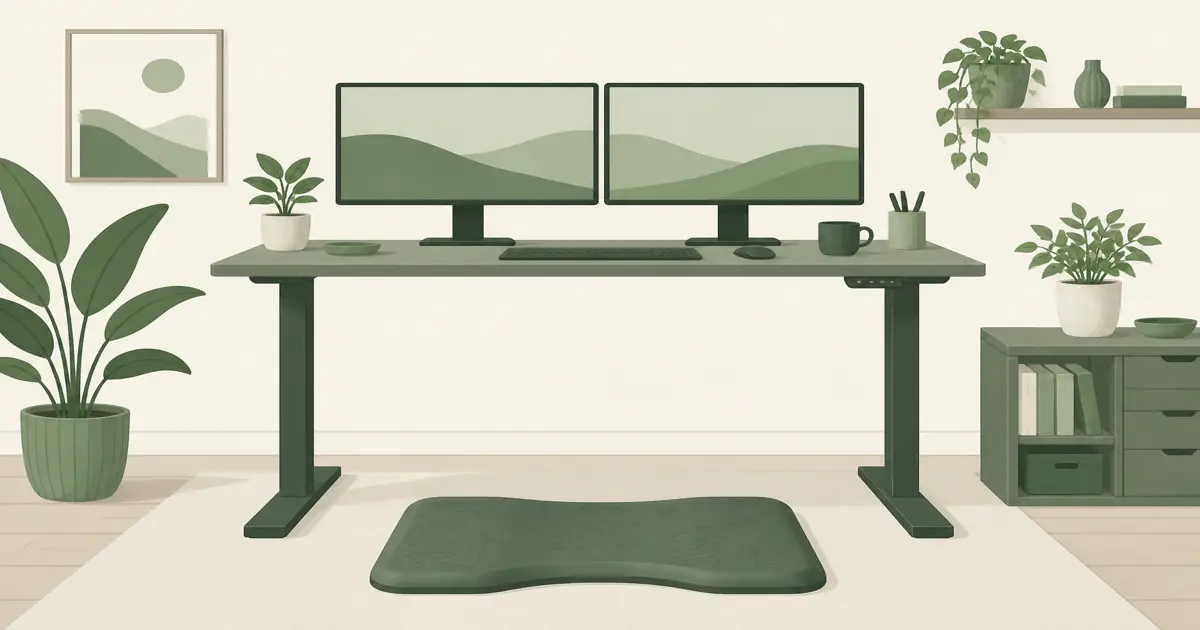
Our picks: Start with the Topo by Ergodriven (paid link) if you stand most workdays. Choose Topo Mini (paid link) when the floor zone is small. Use the FEATOL 20x39 (paid link) flat mat when you only need thick cushion for shorter standing blocks.
Our picks
A standing desk without a mat is how a lot of people “try standing,” hate their feet by lunch, and go back to sitting forever. The desk was not the failure. The floor was. Bare hardwood and tile punish feet and knees. A mat cushions. A contoured mat like Topo also gives your feet places to shift so you do not lock into one stiff stance.
Browse more sit-stand gear in our standing desks hub, then lock a frame with best standing desk if you still need the desk itself. Pair any mat with correct elbow height from standing desk height. Soft feet on a wrong keyboard height still hurt.
Cushion, movement, and floor space
Look for real cushion, often around three-quarters of an inch or more on a flat mat. Ultra-thin yoga mats are not the same job. Beveled edges reduce trip risk. You should be able to slide the mat aside with one foot when you sit, or you will stop using it.
Hardwood and tile make mats feel more valuable. Thick carpet already adds some give, so a tall contoured mat can feel tippy. Measure the clear zone in front of the desk, including chair roll-back when you sit.
Quick comparison
Top pick: Topo by Ergodriven
The Topo by Ergodriven (paid link) is the anti fatigue mat for standing desk users who actually stand for real blocks of time. The terrain gives your feet places to shift, stretch, and rest without turning the morning into a balance-board workout. That subtle movement is the point. Flat mats cushion. Topo also keeps you from locking into one stiff posture.
It slides with one foot when you sit, which matters more than the photos suggest. If you have to stop work to drag a heavy kitchen mat, you will stop using it.
Who it is for: People with a full sit-stand desk who stand an hour or more a day and want the mat designed for that habit.
Skip if: You only stand for ten-minute bursts and a thick flat mat would be enough.
Shop: Topo on Amazon (paid link)
Compact pick: Topo Mini
Topo Mini (paid link) keeps the same terrain idea in a smaller footprint. Choose it when your desk sits in a tight room, you share space with a treadmill pad, or you are shorter and do not need the full original width. You still get the move-while-you-stand benefit. You give up some roaming room for wide stances.
Who it is for: Compact home offices, apartment corners, and anyone who kept rejecting mats because they looked huge.
Shop: Topo Mini on Amazon (paid link)
Best flat budget: FEATOL 20x39
The FEATOL Anti Fatigue Mat (paid link) is the simple thick flat option when you want cushion without paying for contoured terrain. Roughly 0.9 inches of foam helps on hardwood and tile for shorter standing sessions. Beveled edges reduce trip hazards compared with a sharp foam block. Wipe the surface when coffee wins.
It will not coach your feet to move. If you stand all afternoon, expect to change stance yourself. For many hybrid workers who stand in 20-minute bursts, that is fine.
Who it is for: Budget first setups, secondary desks, and people testing whether standing sticks before spending on Topo.
Shop: FEATOL mat on Amazon (paid link)
How to use a mat so it actually helps
- Set desk height first. Soft feet on a wrong keyboard height still hurt.
- Stand for short blocks at first. Build time over a couple of weeks.
- Change foot position on purpose if you buy a flat mat.
- Slide the mat aside when you sit so chair casters stay free.
- Keep cables and the chair base from clipping the mat edge.
If you want motion beyond a mat, compare a walking pad in best under desk treadmill. Mats and walking pads solve different days.
Mistakes that waste the mat
Buying a yoga mat. Too thin for hours of standing.
Ignoring desk height. The mat cannot fix raised shoulders from a high keyboard.
Standing eight hours on day one. You will quit. Ramp up.
Leaving a sticky mat under the chair path. You will hate sitting transitions.
Choosing a mat wider than the open floor. Measure the clear zone in front of the desk, including chair roll-back when you sit.
Floor surfaces and mat choice
Hardwood and tile make mats feel more valuable because they are unforgiving. Thick carpet already adds some give, so a tall contoured mat can feel tippy if the carpet pile is soft. On carpet, prefer a mat with a grippy underside and test whether the chair still rolls cleanly when the mat is parked aside.
If your desk sits on a rug, keep the mat on the hard floor zone in front of the desk rather than stacking soft layers that slide. Sliding mats create ankle micro-corrections all day, which feels like fatigue even when the foam is thick.
How long a mat should last
Daily standing compresses cheap foam. Contoured polyurethane mats made for desks usually outlast thin kitchen pads that were meant for occasional cooking. Wipe spills. Sharp chair casters left on top of a mat will tear covers faster than standing feet will.
A long warranty signals the maker expects years of use. A no-name foam rectangle with no support story is a trial product.
Pairing mats with walking pads
Some people alternate a mat day and a walking-pad day. That works if you have floor space for both and you do not leave the pad under the chair path. Mats cushion static standing. Walking pads add motion. They are not substitutes for each other. Keep cables clear of both so a height change does not yank a charger into the mat edge.
Bottom line: An anti fatigue mat for standing desk work is worth it when it keeps your feet usable long enough that you actually stand. Prefer Topo for daily standing, Topo Mini (paid link) for tight floors, and FEATOL when you only need thick flat cushion. Want more movement than a mat offers? See our balance board for standing desk guide. For rolling chair protection on wood floors, use a chair mat for hardwood floors instead of standing foam. More setup guides live on the blog and homepage.
Frequently Asked Questions
Do I need an anti fatigue mat for a standing desk?
If you stand more than short bursts, yes for most people. Bare hard floors punish feet and knees, which makes you sit again. A mat is a small upgrade that helps you use the desk you already bought.
Is a contoured mat better than a flat one?
Contoured mats like the Topo encourage small position changes. Flat thick mats mainly cushion. If you stand for long stretches, contour usually wins. For short stand blocks, a flat FEATOL-style mat can be enough.
How thick should a standing desk mat be?
Look for real cushion, often around three-quarters of an inch or more for flat mats. Contoured mats vary by terrain height. Ultra-thin yoga mats are not the same job.
Can I use a kitchen anti-fatigue mat?
Some kitchen mats work for short stands. Many are sized oddly for desk stances and wear faster under constant desk use. Standing-desk-specific mats are usually easier to slide and sized for that posture.
Will a mat fix wrong desk height?
No. Set sit and stand heights first. See our standing desk height guide. A mat helps feet after height is correct.
What size anti fatigue mat do I need?
Match the clear floor zone in front of your desk, including chair roll-back when you sit. Full Topo fits most dedicated stand zones. Topo Mini fits apartments and shorter stances. Measure before you buy a mat wider than the open floor.
Can I use a mat with a walking pad?
Yes on alternating days if you have space for both. Do not leave the pad in the chair path. Mats cushion static standing. Walking pads add motion. See best under desk treadmill if you want more movement than a mat.