Acoustic Panels for Home Office: Best Picks for Clearer Calls
Desk accessories
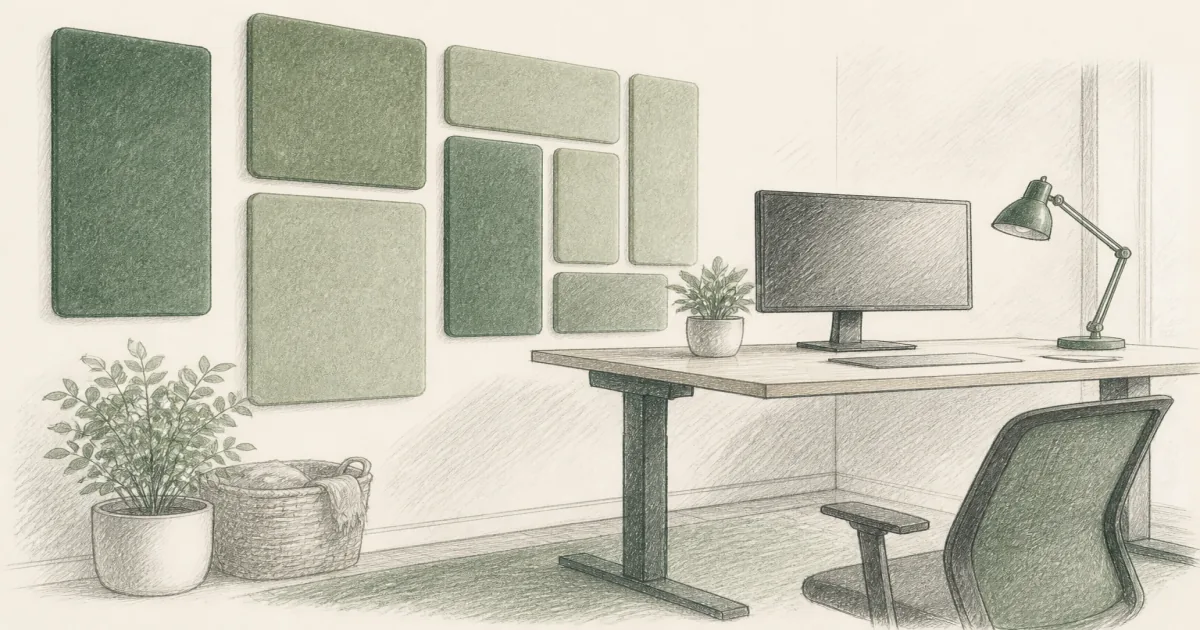
Acoustic panels for a home office cut hard-room echo so calls sound clearer. Start with VIVELDA felt tiles when you also want a pin board, or Art3d wood slats when the wall should look finished.
Our picks
The best acoustic panels for a home office are the VIVELDA felt tiles when you work in a hard spare room and still need a place for notes. They soften echo without looking like a recording booth, and the adhesive tabs suit renters. Step up to Art3d wood slats when the wall behind your video call should look intentional. Keep TONOR hexagons for a low-cost first patch behind the chair.
Browse more desk accessories once the room stops ringing. Keep screen height tied to the best monitor arm pillar if your neck still dips, and finish the rest of the layout with a practical home office desk setup if cables are still loose.
What acoustic panels actually fix at a desk
Hard floors, drywall, and glass bounce your voice back into the mic. Acoustic panels for a home office soak up those reflections so callers hear you, not the room. They do not block the neighbor's TV. If your problem is outside noise, treat doors and windows separately.
Aim for the surfaces that slap your voice first: the wall behind your chair on camera, then side walls at ear height. Leave the mouse side open for a best monitor arm clamp and daily reach. Pens and chargers still belong in a desk organizer, not hanging from hooks on the panel.
Quick comparison
Top pick: VIVELDA felt bulletin acoustic tiles
The VIVELDA Large Felt Bulletin Board 12-Pack is the default acoustic panel kit for a home office because it solves two desk problems at once. You get twelve dense felt tiles that arrange into about a 48 by 36 inch field, or into L-shapes and vertical strips when the wall is awkward. The slatted face looks softer on camera than shiny foam wedges, and the included adhesive tabs avoid a full drill day for many renters.
Each tile is thick enough to hold pins without crumbling like cork. Use that for sprint notes, a weekly plan, or a few printouts while the felt kills the hollow bathroom echo that makes calls harsh. Skip it if you already know you want a full wood accent wall behind the monitor. Jump to Art3d instead of mixing two different wall systems on the same sightline.
Who it is for: Solo remote workers in spare rooms who need clearer calls and a pin board.
Shop: VIVELDA felt acoustic panels on Amazon
Best wood look: Art3d fluted acoustic slat panels
The Art3d 2-Pack Fluted Acoustic Wood Slat Wall Panel is the move when the wall is part of the room design. Two dark walnut panels at 47.2 by 23.6 inches give you a clean accent strip behind a sit-stand desk. The MDF slats sit over dense polyester fiber, so the wall absorbs hard reflections while looking like finished millwork on video.
Plan the install before you open the box. These are not peel-and-stick tiles. You will use construction adhesive, screws through the felt, or both. Measure studs if the panel spans a long run, and keep a best desk lamp from casting harsh stripes across the grooves on camera.
Who it is for: Home offices that face a living area or client calls where the background matters.
Shop: Art3d wood slat panels on Amazon
Best budget: TONOR hexagon peel-and-stick pack
The TONOR 18 Pack Hexagon Acoustic Panels are the cheap first step when the room is loud and the budget is tight. Each tile is about 12 by 10 by 0.4 inches with self-adhesive backing, so you can cover the wall behind your chair in an afternoon. White hexagons read as intentional decor instead of a temporary foam experiment.
Expect less absorption than thicker felt or wood-slat packs. That is fine for a first patch. If calls still sound bright after one wall, add denser felt rather than stacking a second thin foam layer that peels in summer heat.
Who it is for: Students, temporary desks, and anyone testing whether echo is the real problem before spending on wood panels.
Shop: TONOR hexagon panels on Amazon
How to place panels without wrecking the desk zone
Treat the wall behind you first. That is what the mic and camera hear most. Next, hit the first side reflection if the room still rings when you clap once. Keep panels above desk height so clamps, lamps, and a whiteboard for home office can share the same wall without fighting for the same square feet.
Do not bury the keyboard zone under hanging shelves just to add more foam. Clear typing space still matters more than covering every drywall inch. If paper piles migrate to the acoustic wall, you chose the wrong storage plan. Put active sheets on a document stand and leave the panels for sound.
Who should skip acoustic panels
Skip panels if your calls already sound dry and the room has rugs, curtains, and a soft chair. Skip foam packs if the wall is a guest-facing living room and you hate the studio look. Skip any install that needs glue if you rent and cannot patch.
Also skip buying panels to fix a bad headset or a fan roaring beside the mic. Fix the source first. Soften the room second.
Bottom line
Buy the VIVELDA felt 12-pack for most home offices that need quieter calls and a pin wall. Buy Art3d wood slats when the camera wall should look finished. Buy TONOR hexagons when you only need a cheap starter patch. Place panels behind your chair first, keep the desk surface clear, and leave neighbor-noise problems to seals and mass, not foam. More setup guides live on the blog and the homepage.
Frequently Asked Questions
Do acoustic panels for a home office block neighbor noise?
No. Panels absorb reflections inside your room. They do not stop sound traveling through walls the way mass, seals, or construction changes do. Buy them to tame echo on calls, not to silence the apartment next door.
Where should I put acoustic panels near a desk?
Start on the wall behind you on camera, then the first reflection points beside the monitor. Leave the mouse side clear so hanging cables and arms stay reachable. Pair placement with a cable management for desk plan so cords do not cross the treated wall.
How many acoustic panels do I need for a spare-room office?
For a small hard room, cover the wall behind your chair first, then add a strip beside the desk if calls still sound bright. A 12-tile felt set or two wood-slat panels is enough for most solo desks. Giant foam packs help only when the whole room rings like a bathroom.
Are peel-and-stick panels safe for rental walls?
Felt sets with removable adhesive tabs are usually kinder than aggressive foam glue. Test one tile in a hidden corner. Heat tabs gently when removing. Skip heavy wood-slat glue installs if you cannot patch drywall later.
Acoustic panels vs a whiteboard for the same wall?
Use a whiteboard for home office for erasable plans. Use acoustic panels when the problem is echo, not sticky notes. Some felt kits do both: pin notes and soften the room. Do not expect a glossy whiteboard to absorb sound.
Will panels fix a hollow standing-desk room?
They help when bare walls bounce your voice. They will not fix a wobbly desk or a monitor that sits too low. Stabilize the workstation with a solid home office desk setup first, then treat the loudest reflective wall.
Foam wedges or fabric-wrapped panels?
Fabric felt and wood-slat panels look better on camera and suit living-room offices. Classic foam wedges are cheaper coverage for a closed studio corner. Skip foam if the wall faces guests or clients every day.