Best Office Chair for a Short Person: Fit Before Features
The best office chair for a short person has a low enough seat height for flat feet, then enough adjustment to meet the desk without a shoulder shrug.
By Harper Lin
Homeofficebasics is reader-supported. As an Amazon Associate we earn from qualifying purchases. Learn more.
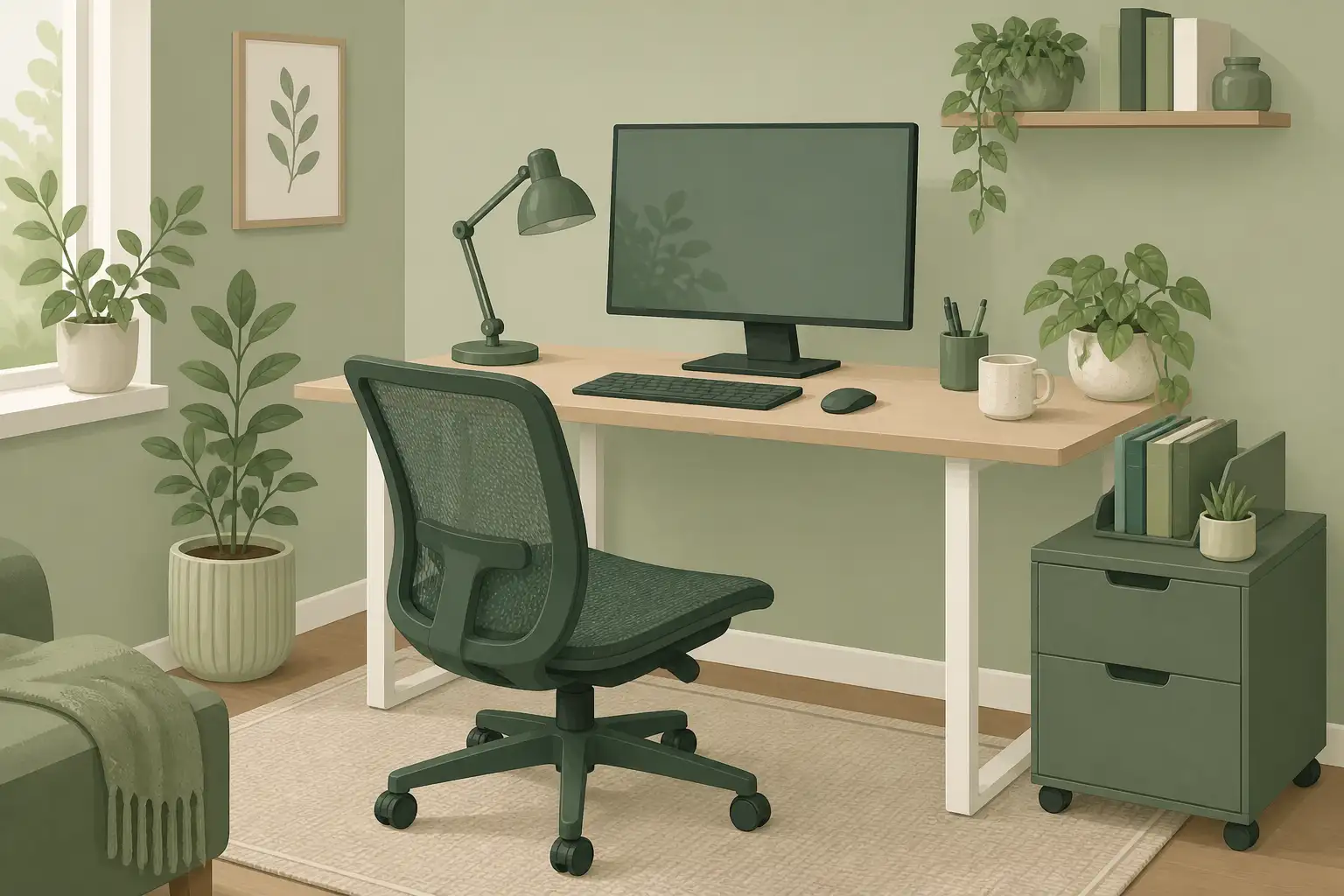
The short answer: The best office chair for a short person is one that lets you plant both feet, sit back into the lumbar support, and still reach the keyboard with relaxed shoulders. Start with the SIHOO M57 (paid link) for broad adjustment. Consider the Hbada P5 (paid link) when its seat range and price suit you better.
Our picks
Many office chairs are designed around a generic body diagram that is not especially useful when your feet barely reach the floor. The usual response is to slide forward. That removes your back from the lumbar support, and then the chair feels bad even if it has every adjustment knob in the catalog.
Confirm the current seat-height range before ordering. A chair that still sits too high after it bottoms out is the wrong chair, not a footrest problem.
Start with your feet, not the headrest
Sit all the way back in your current chair. If your heels float, measure from the floor to the underside of your thigh behind the knee. Compare that number with the chair's lowest seat height. A footrest can cover a modest gap, but it should not be the only reason a chair fits.
Seat depth matters just as much. You want a little room behind your knees while your lower back touches the support. A deep seat makes shorter users perch forward. If the listing gives only overall dimensions, look for buyer reviews that mention seat depth and returns.
Pick one: SIHOO M57
The SIHOO M57 Ergonomic Office Chair (paid link) is the flexible choice because its lumbar support, armrests, headrest, and seat height all move. The live US Amazon listing shows 4.3 stars and more than 16,000 ratings. It also lists a 330-pound capacity.
That adjustment range does not remove the need to check the lowest seat setting. It does mean you can bring the armrests down, move the lumbar to your lower back, and set the desk relationship before deciding the chair is wrong. If the chair goes low enough, it is a strong all-day option.
Pick two: Hbada P5
The Hbada P5 Ergonomic Office Chair (paid link) is a useful alternative when you want mesh, adjustable lumbar, and a conventional task-chair layout. It lists a 300-pound maximum recommendation.
The tradeoff is simpler arm movement than the SIHOO. That may be fine if your desk already sits at a comfortable height. If armrests hit the underside of the desk, lower them or remove them only if the listing allows it safely.
Set the desk and chair together
Set chair height first. Then place the keyboard so your elbows rest near a right angle and your shoulders stay down. If the desktop is too high, a keyboard tray for desk can be more useful than a taller chair. If your feet are close but not quite flat, add a footrest for desk.
Your screen should come up after the chair is settled. A monitor riser or best monitor arm can bring the top third of the display closer to eye level without changing the chair fit.
What to skip
Skip a chair because it says "ergonomic" but hides its seat-height range. Skip deep executive chairs that make you sit on the edge. Do not use a tall chair to reach a high desk if it leaves your feet dangling. That creates a different problem.
Bottom line
For a shorter home worker, chair fit starts with flat feet and a backrest you can actually use. Check the lowest seat height and depth first. The SIHOO M57 has the wider set of adjustments. The Hbada P5 is a reasonable mesh alternative. Pair either with a footrest only when the gap is small. If the desk itself will not drop low enough, fix that next with our standing desk for short person guide.
Frequently Asked Questions
What makes an office chair good for a short person?
A low enough seat for flat feet, shallow enough seat depth, and armrests that can meet the desk without raising your shoulders.
Should I buy a footrest instead of a new chair?
A footrest can solve a small height gap. It cannot fix a seat that is far too deep or armrests that force you away from the desk.
How much space should be behind my knees?
Aim for roughly two or three finger widths when your back is against the backrest.