Drafting Chair for Standing Desks: Sit Tall Without a Full Sit Cycle
A drafting chair is the middle ground between standing all day and dropping your desk to sitting height. Use it when you want a short perch, not a full sit.
By Harper Lin
Homeofficebasics is reader-supported. As an Amazon Associate we earn from qualifying purchases. Learn more.
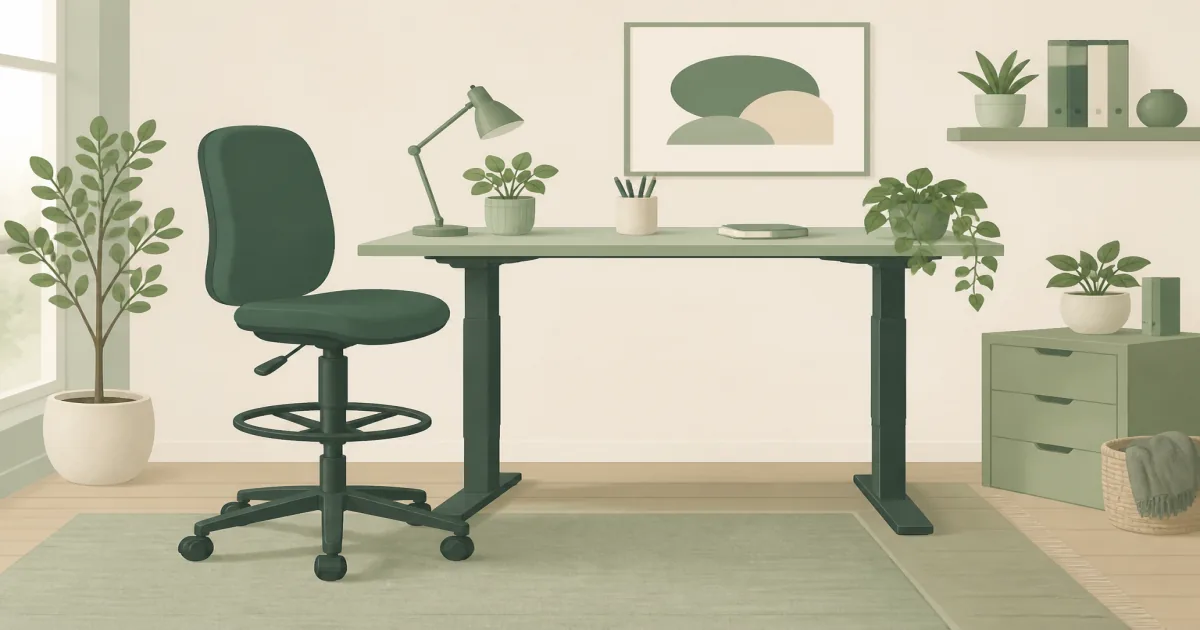
The short answer: A drafting chair (paid link) lets you perch near standing height when your feet need a break but you do not want to drop the desk. Start with the Flash Furniture Mid-Back Mesh Drafting Chair (paid link). Choose the flip-up arms model if you want arm support, or the Bradley tractor stool (paid link) for short, simple rests.
Our picks
A drafting chair is not a fancy office chair with a different name. It is a taller seat for work surfaces that sit above normal desk height. Architects used them at drafting tables. Home offices use them next to standing desks when full standing feels like too much and a full sit feels like giving up.
The useful job is simple. Keep the desktop high. Sit on something tall enough that your elbows still meet the keyboard cleanly. Rest your feet on a ring instead of dangling. Then stand again when you are ready.
If you mostly want all-day sitting comfort, buy a real office chair and lower the desk. If you want active sitting with a rocking base, look at a wobble stool instead. Drafting chairs sit in the middle: upright, tall, and meant for shorter perches.
When a drafting chair beats dropping the desk
Standing desks fail for two opposite reasons. People never stand. Or they stand until their feet quit and then park the desk low for the rest of the week.
A drafting chair helps the second group. You keep the monitors and keyboard near standing height. You take weight off your feet. You avoid the full sit-stand reset that often ends with the desk staying down.
It also helps tall desks in shared homes. One person stands. Another perches for a call. Nobody has to renegotiate memory presets every twenty minutes.
Height, foot ring, and back support
Three checks matter more than brand names.
Seat height range. Confirm the high end reaches your standing elbow height with the desk raised. Measure once using the same standing desk height elbow rule you use for the desk itself.
Foot ring. At drafting height, your feet should land on a ring, not hang. Prefer adjustable rings. Cheap fixed rings force awkward knee angles for shorter or taller users.
Back support. Mesh mid-backs are better for longer perches. Backless tractor stools are fine for ten-minute rests and worse for two-hour email blocks.
Arms are optional. Flip-up arms help when you roll under a thick desktop. Fixed arms can block the desk edge on shallow tops.
Top pick: Flash Furniture Mid-Back Mesh Drafting Chair
The Flash Furniture Mid-Back Mesh Drafting Chair (paid link) is the best starting point for most home standing desks. You get a padded seat, a breathable mesh back, and an adjustable foot ring in the height band drafting chairs are supposed to cover.
It fits people who perch for real work blocks, not only coffee breaks. The mesh back keeps you cooler than thick executive padding. The ring gives your feet a place to land when the seat is high.
Tighten the foot ring carefully during assembly and check it after the first week. That is the common weak spot on drafting chairs in this price lane, and it is fixable with attention more often than it is a reason to skip the category.
Shop: Flash Furniture mesh drafting chair (paid link)
Best with arms: Flash Furniture Mesh Drafting Chair with Flip-Up Arms
Choose the Flash Furniture Mesh Drafting Chair with Flip-Up Arms (paid link) when you want somewhere to rest your forearms at perch height. Flip-up arms matter on standing desks because you can raise them out of the way when you pull in close to type, then drop them for reading or calls.
This is the better shared-desk pick. Guests and partners usually prefer a chair that feels familiar instead of a backless stool. It takes more floor space than a tractor seat, so measure roll-back room first.
Shop: Drafting chair with flip-up arms (paid link)
Simple perch: Flash Furniture Bradley Tractor Drafting Stool
The Bradley tractor drafting stool (paid link) is for short rests. It is compact, easy to clean, and quick to raise when you only need five or ten minutes off your feet.
Skip it as your only seat if you perch for long writing sessions. The limited back support is the tradeoff for the small footprint. Many people keep a tractor stool as a second seat next to a real office chair.
Shop: Bradley tractor drafting stool (paid link)
Drafting chair vs kneeling chair vs office chair
Buy one primary seat for your real workday. Add a drafting chair only if standing height is where you actually live.
Setup tips that keep the perch useful
Match chair height to keyboard height, not to the desktop edge. If you use a keyboard tray, set the tray first.
Leave cable slack under the desk so casters do not yank a power strip when you roll in.
On hardwood, add soft casters or a mat. A tall chair that rolls away mid-call is more annoying than a slightly firmer floor grip.
Do not treat the drafting chair as eight-hour seating on day one. Use it the way you use standing: in blocks, with a plan to move.
Bottom line: A drafting chair earns its spot when you want to stay near standing height without locking your knees all afternoon. Prefer the mesh Flash Furniture drafting chair for daily perches, the flip-up arms version for arm support, and the Bradley tractor stool for short breaks. Pair it with a solid standing desk and a normal office chair for full sits. More setup guides live on the blog and homepage.
Frequently Asked Questions
What is a drafting chair?
A drafting chair is a taller task chair or stool built for desks and work surfaces above normal sitting height. Home users often buy one to perch at a standing desk without lowering the top all the way.
Do I need a drafting chair with a standing desk?
Only if you want a mid-height rest. Many people alternate full sit and full stand. A drafting chair helps when standing tires your feet but you still want the desk high.
Drafting chair vs office chair?
A regular office chair targets standard desk height. A drafting chair goes higher and usually includes a foot ring so your legs are not dangling.
Should the foot ring be adjustable?
Yes for most adults. Fixed rings force one leg angle. Adjustable rings let you match seat height without cutting off circulation behind the knees.
Can a drafting chair replace standing entirely?
It can become a lazy default. Use it for short rests, then stand again or drop the desk for a real sit with a proper chair.
What height range should I check?
Match the chair’s maximum seat height to your standing desk height elbow target. If the chair tops out too low, you will still hunch at a raised desk.
Are casters safe on hardwood?
Soft casters or a chair mat help. Hard plastic wheels can mark wood floors and roll farther than you want at perch height.